

Metal corrosion triggers expensive failures for automotive and electronic metal parts.
Electrophoretic coating creates uniform anti-corrosion layers for global component makers worldwide.
Dongguan Yongxin Industrial, a 2018 national high-tech firm, offers custom e-coat for many metal alloys.
Weaknesses of Traditional Finishing vs Electrophoretic Coating
Metal parts exposed to humidity, salt spray or UV light develop rust and surface damage over time.
Standard spray painting leaves thin spots, drips and uncovered hidden areas on complex metal pieces.
Without robust protection, vehicle and communication hardware may fail within a few months.
Electrophoretic coating fully covers parts and keeps consistent film thickness on complex geometries.
Cathodic epoxy e-coat dominates the market, offering over 1,000 hours of salt spray resistance.
Anodic e-coat typically delivers around 500 hours of salt spray protection for general industrial parts.
Global coating chemical suppliers include PPG, BASF, Axalta, Nippon Paint and Kansai Paint.
Buyers still seek reliable factories for custom colouring, alloy handling and full technical support.
Yongxin’s Full Electrophoretic Coating Product Range
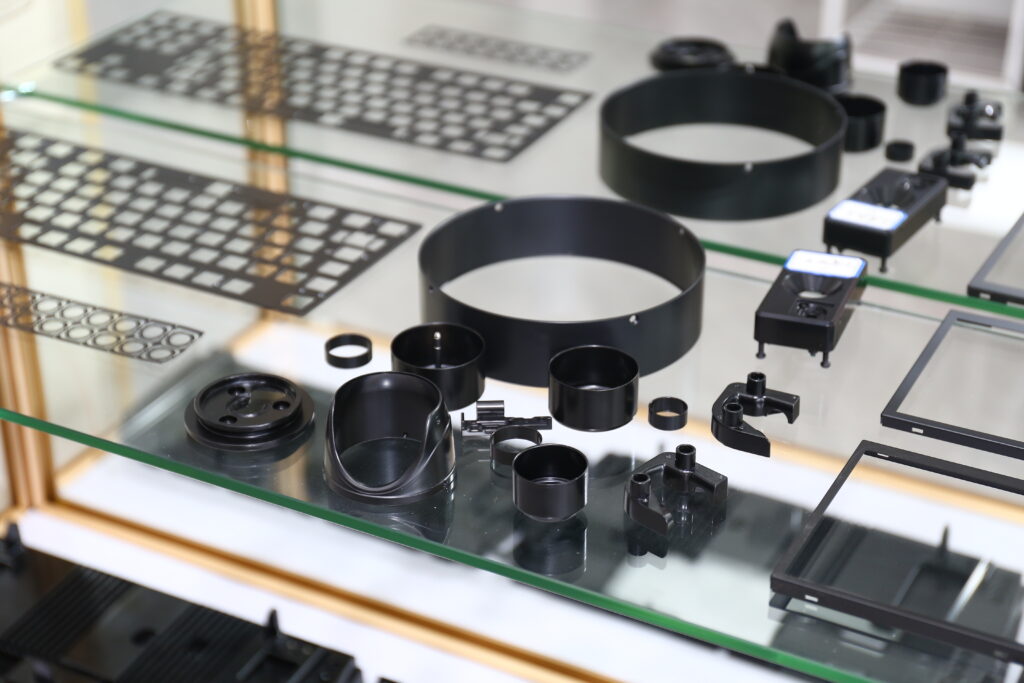
Yongxin black e-coat uses acrylic and epoxy resin, with 15–25 μm standard and custom colour choices.
White electrophoretic coating delivers smooth fine finishes for CNC machined and electronic housing parts.
High salt spray anionic e-coat comes in black or white for die cast, stamped and automotive components.
Epoxy e-coat for stamped metal provides stable rust resistance for large stamping production batches.
Over 20 auxiliary machines support blasting, polishing and laser prep before e-coat line processing.
The in-house lab uses German, Swiss and Japanese tools to test thickness, gloss, colour and salt spray.
A dedicated R&D team of 5–10 engineers optimises coating formulas to meet global client demands.
Yongxin’s Step-by-Step Electrophoretic Coating Workflow
Pre-treatment removes oil, dirt and oxides to boost adhesion between metal substrate and paint film.
Multiple deionised water rinses wash away residual chemicals to protect the e-coat paint bath.
Immersion and electric deposition deposit charged paint evenly into grooves and inner cavities.
Post-rinse and paint recovery recycles excess liquid, cutting waste and lifting material efficiency.
Controlled oven curing at 150–180°C turns wet paint into tough, scratch-resistant protective layers.
Continuous batch inspections verify coating thickness, adhesion, gloss and anti-corrosion performance.
Core Factors When Selecting an E-Coating Service Manufacturer
Procurement teams should verify factory capacity, certifications and metal substrate processing ability.
Yongxin employs 60–80 staff and runs six e-coat lines with ISO 9001, ISO14001 and IATF16949 certificates.
Annual output hits 30 million units, supporting prototype trials and mass export production orders.
Its integrated service covers CNC, die casting, stamping and finishing to simplify your supply chain.
The factory processes steel, stainless steel, zinc, aluminum, magnesium and many die-cast metal parts.
Request Samples and Formal Quotation from Yongxin
Send drawings and material specs to Yongxin for sample e-coat processing and commercial price quotes. Contact Mr. Wu by email or WhatsApp for technical reviews. Visit yxecoat.com to view product sheets and download the full electrophoretic coating capability brochure. Yongxin engineers recommend proper coating grades based on environment and anti-corrosion targets.
Final Takeaway
Selecting a certified e-coat factory with stable quality improves metal component long-term durability.
Yongxin supplies e-coat options for many alloys, from cosmetic finishes to high salt spray grades.
Global manufacturers can contact Yongxin now to discuss surface treatment, samples and pricing.